
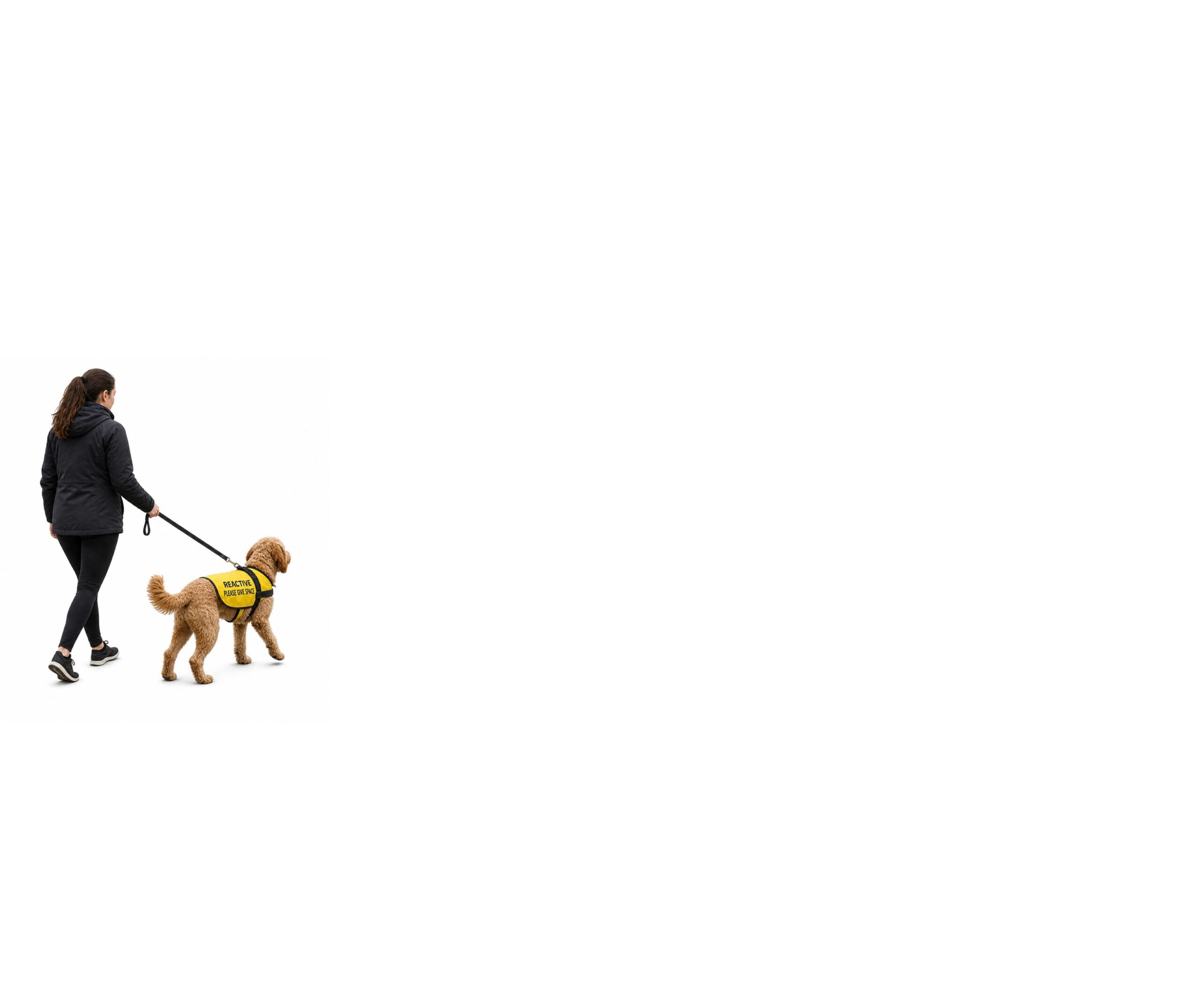
Yellow Dog Wear: Visual Signals That Help Dogs Feel Safe
If you’ve ever seen a dog in a yellow lead, yellow vest, yellow bandana, or a bright sleeve that says something like “NERVOUS”, “NEEDS SPACE” or “DO NOT PET” — that’s not a fashion choice.
It’s communication.
Yellow dog wear (often called “Yellow Dog” signals) is a simple way for owners, walkers, and professionals to say: please give this dog space. It’s especially useful for anxious dogs, nervous dogs, dogs in rehabilitation, dogs recovering from injury, dogs who are reactive to other dogs or people, and dogs who are simply not comfortable with strangers leaning in.
It doesn’t mean the dog is “bad”. It means the dog has a boundary — and we’re being responsible about protecting it.
What is yellow dog wear?
Yellow dog wear is any visible yellow item used as a polite warning signal. Common examples include:
- Yellow lead
- Yellow harness
- Yellow vest/coat
- Yellow bandana
- Yellow ribbon tied to the lead
- Bright patches/sleeves with wording (for example: “I NEED SPACE”)
The idea is that yellow is easy to spot at a distance, so people can adjust before they’re too close.
What yellow dog signals can mean (in plain English)
A yellow signal can mean lots of different things, including:
- The dog is anxious or fearful
- The dog is nervous of other dogs
- The dog is worried around people (especially strangers)
- The dog is in training and needs focus
- The dog is recovering from surgery/injury and needs calm, controlled movement
- The dog is a rescue dog settling in
- The dog is working through reactivity and needs distance to stay under threshold
It’s not a diagnosis and it’s not a label. It’s a heads-up.
Why it’s useful (psychology + behaviour)
1) It reduces pressure before the dog has to react
Many anxious or reactive dogs don’t want conflict — they want space.
But if people (or dogs) keep approaching, the dog’s nervous system climbs: scanning, bracing, barking, lunging, freezing, growling. That’s not “naughty”. That’s a dog trying to cope with something they can’t handle at that distance.
A visible signal helps create space early, which prevents the dog being pushed over threshold.
2) It supports learning and behaviour change
Behaviour work relies on repetition of safe experiences.
If a dog is constantly surprised by off-lead dogs, people reaching in, or children running up, the dog rehearses the very reactions we’re trying to reduce.
Yellow signals help owners set up calmer, more predictable exposures — which is where real progress happens.
3) It protects welfare (and protects everyone else too)
When we respect a dog’s boundaries, we reduce stress, reduce risk, and increase trust.
A dog who learns “my handler will advocate for me” becomes more emotionally resilient over time. That’s huge.
What yellow dog wear does not do
It’s important to be honest about this.
- It does not magically stop people approaching.
- It does not replace training, management, or a proper behaviour plan.
- It does not mean the dog is aggressive.
- It does not mean the dog can’t improve.
It’s a tool — a visual boundary — and it works best when paired with good handling and calm, consistent routines.
The benefits (real-world)
Yellow dog wear can help:
- Reduce unwanted greetings and sudden close contact
- Give owners confidence to advocate without feeling rude
- Create safer walking experiences for nervous dogs
- Reduce trigger stacking (fewer “too much, too close, too fast” moments)
- Support decompression and recovery after stressful events
- Help the public learn that not every dog wants interaction
Other visual aids that help (not just yellow)
Yellow is common, but it’s not the only option. What matters is visibility and clarity.
1) Text patches and sleeves
Clear wording often works better than colour alone, especially for people who don’t know the yellow dog idea.
Useful phrases include:
- NEEDS SPACE
- NERVOUS
- DO NOT PET
- IN TRAINING
- NO DOGS (for dog-reactive dogs)
Short, bold, readable at a distance.
2) Lead flags / lead wraps
These are brilliant because they sit right where people look — on the lead.
3) Muzzles (when appropriate)
A well-fitted, properly introduced muzzle can be a safety tool and a visual signal.
It can reduce risk, reduce owner anxiety, and prevent a dog being put in situations they can’t cope with. It also helps the public keep a respectful distance.
Important note: a muzzle doesn’t mean a dog is dangerous. It often means the handler is responsible.
4) Harnesses with handles
For some dogs, a harness with a handle allows calm, controlled movement without grabbing collars or reaching into the dog’s space. That can reduce handling conflict for touch-sensitive dogs.
5) “Do not approach” positioning
Sometimes the best visual aid is how you walk:
- stepping off the path
- using parked cars/hedges as a visual barrier
- turning away early
- keeping the lead loose and your body between your dog and the trigger
That body language communicates to others: we’re not greeting today.
Why these signals matter for anxious and nervous dogs
Anxious dogs are often living with a nervous system that’s already working hard.
They don’t need more pressure. They need predictability, space, and safe repetition.
Visual signals help because they:
- reduce surprise interactions
- reduce the dog’s need to escalate to be heard
- protect trust between dog and handler
- keep the dog under threshold so learning can happen
And for dogs who are nervous of other dogs, distance is not avoidance — it’s a training tool. Space is what allows calm observation instead of reaction.
A gentle ask (for the public)
If you see a dog with a yellow lead/vest/bandana, or a clear “needs space” sign:
- don’t approach head-on
- don’t let your dog run over
- don’t call out “it’s okay, my dog’s friendly”
- give space, pass calmly, and let that dog breathe
You might be walking past a dog who is doing the hardest thing they’ve done all week.
If you’re a dog owner thinking about using one
If you’ve got a dog who is anxious, reactive, nervous, recovering, or simply not keen on strangers — using a visual signal is not overreacting.
It’s advocacy.
It tells your dog: I’ve got you.
The Canine Behaviour Rehabilitation Centre CBRC
