
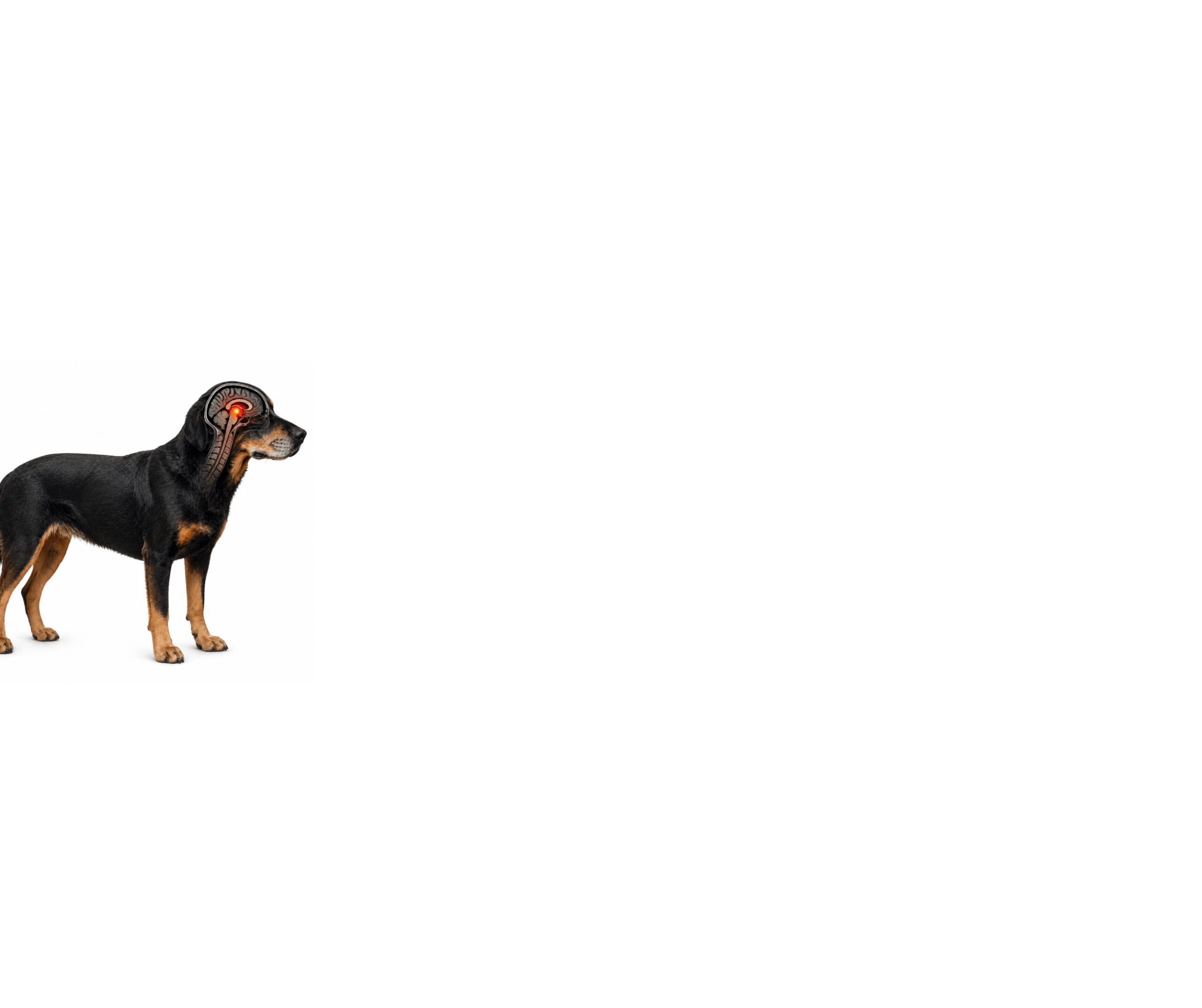
When Neurology Shows Up as Behaviour (and Why It Matters)
Behaviour is communication. And sometimes what looks like a “training problem” is actually a nervous system problem.
In the dog world we often talk about triggers, thresholds, fear, learning history, reinforcement, and environment. All of that matters. But there’s another layer that can’t be ignored: neurology.
Neurological issues can show through as behaviour changes because the brain and nervous system are the control centre for movement, sensation, emotion, arousal, and stress responses. If that system is inflamed, injured, degenerating, misfiring, or simply not processing information normally, the dog may behave in ways that look like anxiety, reactivity, aggression, “stubbornness”, or “not listening”.
This isn’t about scaring people or diagnosing dogs online. It’s about widening the lens, so dogs don’t get labelled as difficult when they’re actually struggling.
What do we mean by “neurological issues”?
Neurological issues are conditions that affect the brain, spinal cord, nerves, or how signals are processed.
Some are obvious (seizures, wobbliness, paralysis). Others are subtle and show up first as changes in behaviour, tolerance, or emotional regulation.
How neurology can look like a behaviour problem
Here are some common patterns we see in real life. None of these automatically mean “neurological”, but they are worth paying attention to, especially if they are new, escalating, or don’t fit the dog’s history.
1) Sudden behaviour change “out of nowhere”
A dog who has been stable for months or years suddenly becomes reactive, snappy, panicky, restless, or unable to settle.
Owners often say: “It’s like he’s a different dog.” That phrase matters.
2) Reduced tolerance to handling or touch
Touch sensitivity can be behavioural, but it can also be neurological or pain-related. A dog may start avoiding touch, flinching, freezing, growling, or snapping during:
- Collar grabs
- Harnessing
- Grooming
- Nail trims
- Being moved off furniture
If the dog’s sensory processing is altered, normal touch can feel intense, confusing, or even painful.
3) Startle responses and hypervigilance
Some dogs become “jumpy” and reactive to small sounds or movement. They may scan constantly, struggle to relax, or react disproportionately.
This can overlap with anxiety, but it can also be linked to how the nervous system is processing sensory input.
4) Compulsive or repetitive behaviours
Spinning, tail chasing, fly snapping, shadow/light chasing, sudden frantic licking, or pacing can be stress behaviours — and they can also be influenced by neurological factors.
The key is pattern, intensity, and whether the dog can “come out of it”.
5) Confusion, disorientation, or “not recognising” familiar things
Dogs may seem lost in familiar places, stare into space, get stuck in corners, struggle with routines, or appear to forget cues they previously knew.
In older dogs this can overlap with canine cognitive dysfunction (CCD), but any age dog can show neurological signs.
6) Changes in sleep, arousal, and recovery
A dog may:
- struggle to switch off
- sleep lightly and wake suddenly
- have night-time restlessness
- take much longer to recover after stimulation
A nervous system that can’t regulate well will often show it here.
Why this matters: the implications
1) Training alone may not work (and that’s not anyone’s fault)
If the dog’s brain or nervous system is not processing information normally, you can do everything “right” and still hit a wall.
That doesn’t mean behaviour work is pointless. It means the plan needs to include medical investigation and nervous-system support, not just exposure, obedience, or management.
2) The dog’s threshold can be artificially low
Neurological and pain-related issues can reduce a dog’s tolerance. The dog reacts faster, recovers slower, and appears “over the top”.
From the outside it looks like attitude. From the inside it can be overwhelm.
3) Risk can change quickly
When a dog is confused, uncomfortable, or sensory-overloaded, bite risk can increase — especially around handling, restraint, or close contact.
This is why we take “sudden snapping” seriously, even in dogs who have never bitten before.
4) Welfare and ethics: labels can harm dogs
If we label a dog as “dominant”, “spiteful”, “stubborn”, or “aggressive” without considering health, we risk:
- pushing them too hard
- using the wrong methods
- missing treatable conditions
- increasing fear and conflict
A welfare-led approach always asks: “What’s driving this?” not “How do I stop it?”
What to do if you suspect something neurological
1) Start with a proper veterinary conversation
Bring specifics, not just “he’s anxious”. Useful notes include:
- what changed, and when
- what the dog does (behaviour description)
- frequency and duration
- triggers (if any)
- recovery time
- videos (when safe)
2) Rule out pain and medical drivers
Neurology and pain overlap heavily in behaviour. Orthopaedic pain, spinal pain, ear issues, dental pain, GI discomfort, and endocrine problems can all change behaviour.
A good behaviour plan often starts with a good medical work-up.
3) Adjust the behaviour plan to protect the nervous system
In many cases the most helpful immediate steps are:
- decompression and predictable routine
- reducing intensity (less “busy” exposure)
- consent-based handling and touch
- management to prevent rehearsal of reactions
- enrichment that lowers arousal (sniffing, chewing, foraging) rather than ramps it up
4) Work as a team
The best outcomes usually come from collaboration: vet + behaviour professional + owner, all sharing observations and moving in the same direction.
A gentle reminder
You don’t need to be a vet to notice that something isn’t right. If your dog’s behaviour has changed suddenly, or the reactions don’t match the situation, it’s not “overreacting” to ask medical questions.
Sometimes the kindest thing we can do is stop trying to train through it — and start listening to what the nervous system is telling us.
If you want help
If you’re seeing behaviour changes and you’re not sure whether it’s anxiety, pain, neurology, or a mix, get in touch. The goal is always the same: safety, welfare, and a plan that actually fits the dog in front of us.
