
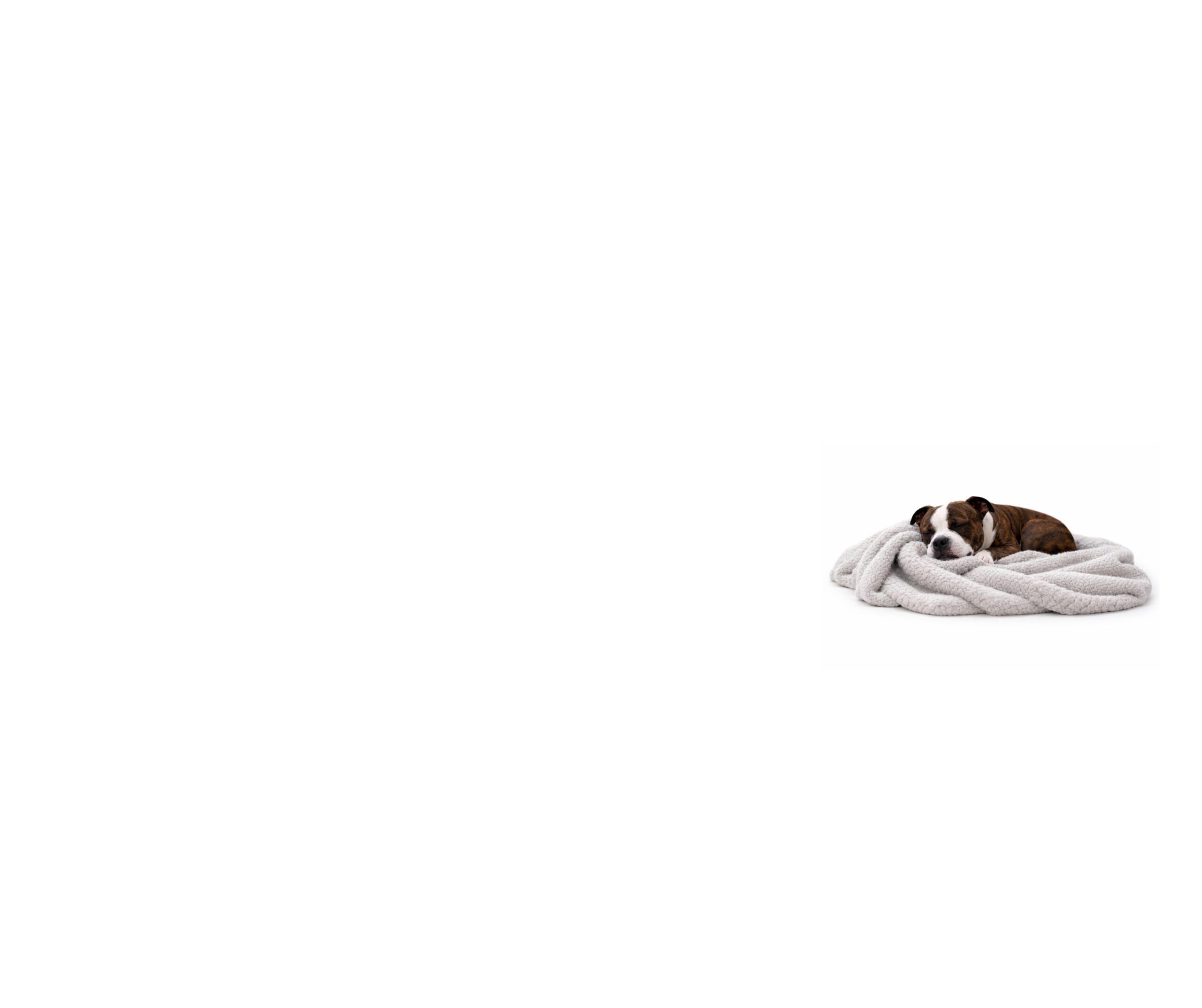
Sleep isn’t a luxury for dogs — it’s a biological need. When a dog is well-rested and has enough genuine downtime, their nervous system can regulate, learning improves, and day-to-day life feels safer and more predictable. When they’re overtired or constantly “on”, you’ll often see more reactivity, more sensitivity to handling, more frantic behaviour, and a dog who struggles to cope with normal life.
What we mean by “decompression”
Decompression is the process of coming down from stress and stimulation and returning to a calmer baseline. It’s not just “lying down” — it’s the nervous system switching out of survival mode.
A decompressed dog typically shows: – Softer body language (looser muscles, slower movement) – Better ability to disengage from triggers – More curiosity and sniffing – More stable appetite and digestion – Improved tolerance of handling and everyday requests
Why sleep matters (more than most people realise)
Dogs don’t just sleep to rest their bodies — they sleep to process the world.
1) Sleep supports emotional regulation
If a dog is short on sleep, their stress hormones stay higher for longer. That can mean: – Lower thresholds (they react faster) – Bigger reactions to smaller triggers – Less ability to recover after a scare
2) Sleep supports learning and behaviour change
Training doesn’t “stick” properly without rest. Sleep is when the brain consolidates learning. If you’re working on recall, calm behaviour around visitors, or reducing reactivity, sleep is part of the training plan.
3) Sleep supports physical health
Poor sleep can affect immune function, digestion, pain sensitivity, and recovery from injury or illness. For dogs on behavioural medication or with chronic stress, sleep becomes even more important.
The overtired dog: what it can look like
Overtired dogs don’t always look sleepy. They often look busy.
Common signs include: – Zoomies that don’t resolve into relaxation – “Fizzy” behaviour: pacing, panting, whining, shadow-chasing – Increased mouthiness or nipping – Struggling to settle after walks – More barking at small noises – More conflict with other dogs in the home
Decompression: why “more exercise” isn’t always the answer
A lot of well-meaning owners respond to stressy behaviour by adding more activity. For some dogs, that can accidentally build stamina for adrenaline rather than build calm.
Decompression is about quality of time, not quantity of movement. For many dogs — especially anxious, reactive, or touch-sensitive dogs — the most therapeutic thing you can do is reduce pressure and allow the nervous system to settle.
How much sleep do dogs need?
It varies by age, breed, and individual temperament, but many adult dogs need roughly 12–14 hours of sleep per day, and puppies can need 18–20 hours.
If your dog is anxious, recovering from a big life change, or doing behaviour work, they may need more rest than you expect.
Practical ways to build sleep and decompression into daily life
1) Create a safe, predictable rest space
Aim for a calm zone where your dog can switch off: – A quiet room, crate, pen, or bed behind a baby gate – Reduced foot traffic – Soft lighting and minimal noise
2) Protect rest time
Rest doesn’t happen if the dog is constantly interrupted. – Limit repeated “checking in” – Avoid calling them over and over – Give them permission to be off-duty
3) Choose calming activities over high arousal
Good decompression options include: – Sniff walks (slow, choice-led, lots of information gathering) – Scatter feeding in grass – Lick mats or stuffed Kongs – Gentle chewing – Easy, low-pressure training games (short and sweet)
4) Reduce “social pressure”
Some dogs find constant interaction stressful. – Let them opt out of cuddles – Teach kids to leave sleeping dogs alone – Use consent-based handling: pause and see if the dog chooses to stay
5) Watch the cumulative load
Stress stacks. A dog might cope with one hard thing, but not five. Examples that add up: – Visitors + a busy walk + grooming + a delivery driver + a noisy evening
When you notice your dog getting “whizzy”, think: Where can we subtract, not add?
A simple decompression routine (example)
Here’s a calm, realistic structure you can trial: 1. Morning: toilet break + 20–40 minute sniff walk 2. Breakfast: enrichment feeding (scatter/slow feeder) 3. Mid-morning: protected rest time (quiet space) 4. Afternoon: short training session (3–5 minutes) + calm chew 5. Evening: gentle potter walk or garden sniff + settle routine
When to get extra support
If your dog cannot sleep, cannot settle, or seems constantly on edge, it’s worth getting professional help. Chronic stress can be driven by pain, digestive discomfort, sensory sensitivity, or underlying anxiety.
Speak to your vet if you notice: – Sudden changes in sleep or behaviour – Increased irritability or handling sensitivity – Panting, pacing, or restlessness that doesn’t fit the environment
The takeaway
Sleep and decompression are not “nice extras” — they’re foundational. If you want a dog who can learn, cope, and feel safe in the world, you start by protecting their ability to truly rest. Calm isn’t something we demand from dogs — it’s something we build by meeting their needs.
cbrc.uk
Empowering Canine Communication
