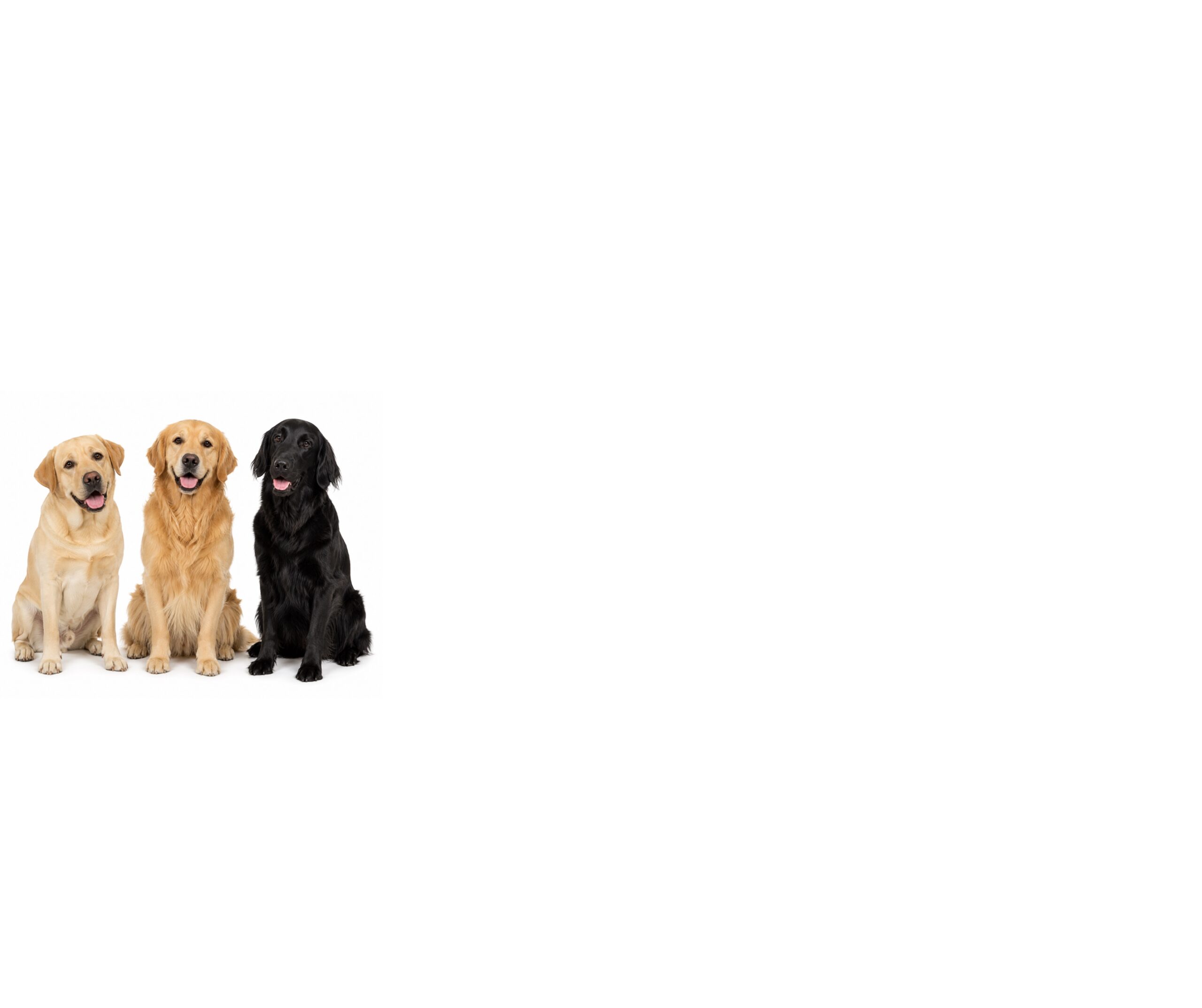
Retrievers are often sold as the “easy family dog.” And compared to some types, they can be wonderfully forgiving.
But behaviourally, retrievers are still working dogs at heart. They were built to:
- work closely with humans
- carry things in their mouths
- persist in the environment (water, cover, scent)
- stay optimistic and keep trying
So when a retriever struggles, it’s rarely because they’re “bad.” It’s usually because their arousal, needs, and lifestyle don’t match what pet life is asking of them.
This guide covers Labradors, Golden Retrievers, Flatcoats, Chesapeakes, and retriever-y crosses (and the common “Lab-type” pet dog profile).
Genetics & purpose: what retrievers were bred to do
Retrievers were selected for:
- biddability (working with people)
- soft mouth (carrying game)
- persistence (keep going in tough terrain)
- high food and toy motivation
- sociability (generally)
Working lines vs show lines (this matters a lot)
Working-bred retrievers often bring:
- higher drive and stamina
- faster arousal
- more mouthiness and object obsession
- more environmental focus (scent/water/movement)
Show/pet-bred retrievers often bring:
- lower drive (not always)
- more body weight / slower pace
- sometimes more sensitivity (especially in some Goldens)
Neither is “better.” But they are different dogs, and mismatches create problems.
What retrievers are often like as pets (the honest version)
In the right home, retrievers are often:
- affectionate and people-oriented
- optimistic and resilient
- highly trainable
- great with routines and jobs
Common realities include:
- adolescence is chaos (big body, baby brain)
- mouthiness is normal, not a “phase” you can ignore
- over-friendly greeting behaviour can become a real safety issue
- lead pulling is common (they’re strong and enthusiastic)
- separation distress can show up in very people-focused individuals
Retrievers are often “easy” in temperament, but they’re not automatically easy in behaviour.
Common behaviour challenges (and what they usually mean)
1) Mouthiness, grabbing, and “everything is a toy”
This can look like:
- biting sleeves/hands in excitement
- stealing items and running off
- chewing furniture
- carrying and shredding objects
Often, it’s:
- normal retriever oral behaviour
- over-arousal
- lack of appropriate outlets
What helps: teaching drop/leave/trade, structured tug rules, chew outlets, and reinforcing calm mouth behaviour.
2) Over-friendly greetings and jumping up
Many retrievers are social and optimistic, which can become:
- jumping at faces
- body-slamming visitors
- pulling to greet dogs/people
What helps: neutrality training, greeting protocols, reinforcement for four paws down, and stopping rehearsals.
3) Lead pulling and “I can’t think out here”
Pulling isn’t always “bad manners.” It’s often:
- arousal
- reinforcement history (pulling works)
- environmental reward (sniffing, people, dogs)
What helps: equipment that protects the handler (well-fitted harness), reinforcement for check-ins, decompression routes, and teaching loose lead skills in low-distraction places first.
4) Recall struggles (especially around scent, water, and other dogs)
Retrievers are often labelled “reliable” — but:
- adolescence + distractions = selective hearing
- water and scent are huge reinforcers
What helps: long-line training, premack-style recall (recall earns access), and building recall as a habit, not a test.
5) Over-arousal and “can’t switch off”
Some retrievers (especially working lines) live in a constant upshift:
- pacing
- whining
- demand barking
- inability to settle after walks
What helps: teaching an off-switch, mat training, calm enrichment, and reducing high-octane games that keep adrenaline high.
6) Resource guarding (food, chews, stolen items)
Not all retrievers guard — but when they do, it’s often around:
- chews
- high-value food
- stolen items (because humans chase)
What helps: stop chasing, trade games, management, and reducing conflict around resources.
7) Reactivity (yes, retrievers can be reactive)
Retrievers can show:
- frustration reactivity (wanting to greet)
- fear-based reactivity (less common, but real)
- barrier frustration (windows/fences)
What helps: distance, disengagement training, and reducing rehearsal.
8) Separation distress
Some individuals are very people-attached.
What helps: independence training, predictable routines, gradual alone-time plans, and addressing overall stress.
What tends to work well (retriever-friendly approach)
1) Give them a job — but pick the right job
Helpful outlets:
- scentwork
- dummy retrieves with rules (not frantic chuck-it)
- search games
- structured training sessions
Be careful with:
- endless ball throwing (can create adrenaline addiction)
- chaotic dog-park play as the main exercise
2) Train calm as a skill
Retrievers often need explicit teaching of:
- settle
- wait
- disengage
- calm greetings
3) Build skills in layers (don’t train in the hardest environment first)
Start in low distraction, then gradually add:
- distance
- duration
- distractions
4) Adolescence management is everything
If you do one thing well with a retriever, do this:
- prevent rehearsal of jumping/pulling/stealing
- keep routines predictable
- reinforce calm and check-ins
Is a retriever right for you? (quick reality-check)
A good fit if you want:
- a people-oriented dog
- a trainable dog who enjoys games
- a dog who can fit into family life with structure
May struggle if:
- you want a low-energy, low-interaction pet
- you don’t have time for adolescence training
- you hate mouthiness and mess (retrievers are often both)
Breeder/rescue placement notes (what I’d want people to know)
- Ask whether the dog is working-bred or show/pet-bred.
- Ask about settle and recovery after excitement.
- Ask about mouthiness and how it’s been managed.
- Prioritise temperament and health over colour trends.
Want support with your retriever?
If you’re living with a retriever (Lab, Golden, Flatcoat, or a retriever-y cross) and you’re dealing with mouthiness, over-arousal, pulling, reactivity, or a dog who can’t switch off, you’re not alone — these are common patterns, and they respond brilliantly to a plan that’s structured, kind, and realistic.
At CBRC we support complex cases in two main ways:
- One-to-One Behavioural Support
- Residential Rehabilitation (for dogs who need decompression, structured training, and a consistent rehab plan)
If you want to talk it through, tell us your dog’s age, breed/type, what your day-to-day routine looks like, what the hardest moments are, and what “better” would look like — and we’ll map out the safest next steps.
The Canine Behaviour Rehabilitation Centre CBRC
CONTACT US