
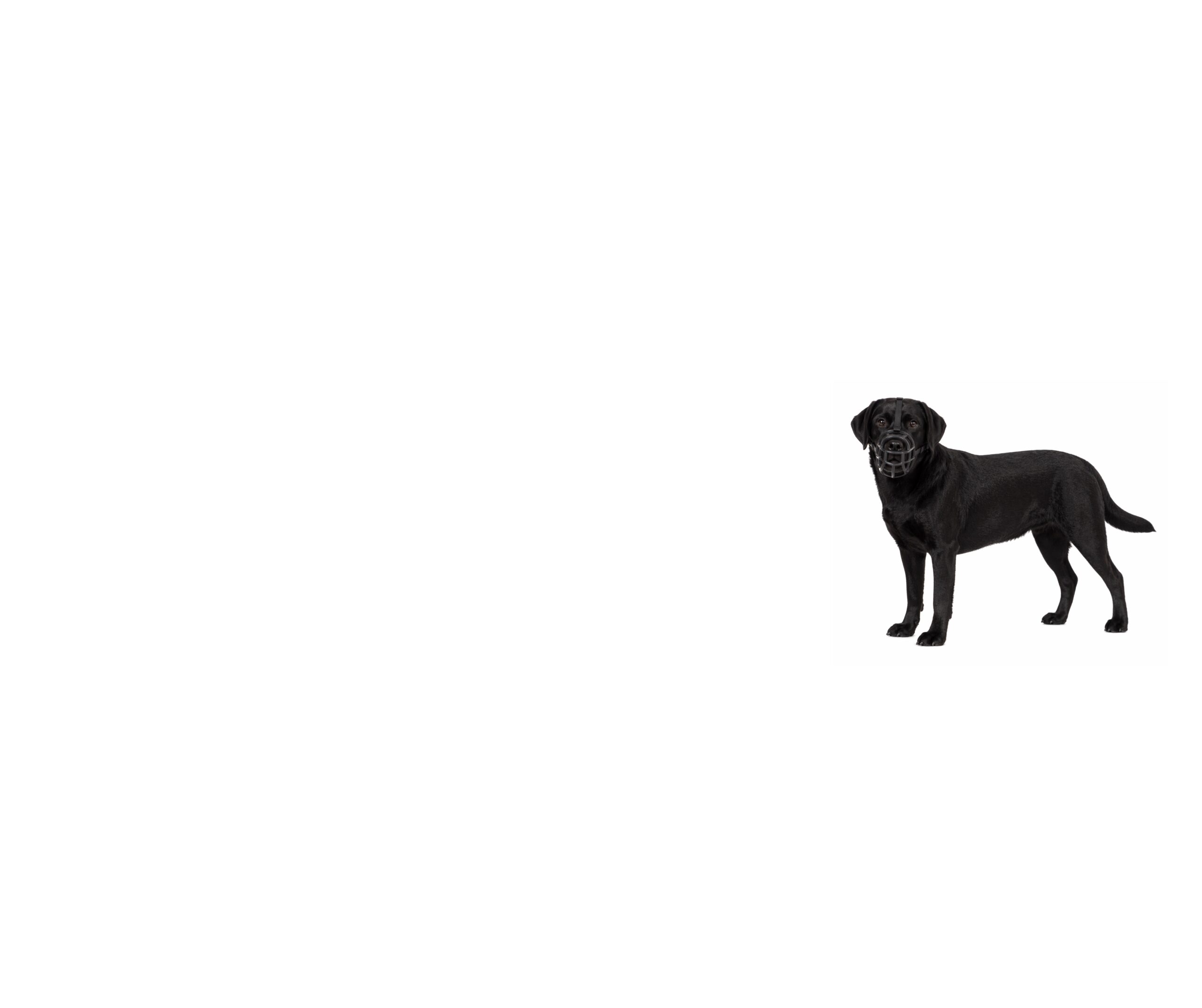
Muzzles — A Positive, Practical Tool (Not a Label)
Muzzles get a bad reputation, and it’s such a shame — because a muzzle is often one of the kindest, most responsible choices an owner can make.
A muzzle is not a sign you’ve failed. It’s not something to be embarrassed about. It doesn’t automatically mean a dog is “dangerous”.
Most of the time, a muzzle is simply a safety tool and a stress-reducer — for the dog, for the handler, and for everyone around them.
Why muzzles can be a really positive thing
1) They create safety (which creates calm)
When people feel safer, they handle better. When handlers handle better, dogs feel safer.
A muzzle can take the edge off those “what if” moments:
- What if a dog panics at the vet?
- What if a loose dog runs over?
- What if a child appears suddenly?
- What if we have to handle an injury?
That extra layer of safety can mean the difference between a situation escalating and a situation being managed calmly.
2) They protect dogs from being put in impossible situations
Some dogs are working through fear, reactivity, handling sensitivity, pain, trauma, or simply a very low threshold in certain contexts.
A muzzle can allow a dog to access the world more safely while we do the real work: decompression, confidence building, behaviour modification, and appropriate management.
3) They can prevent one incident changing a dog’s whole future
One bite (or even one near-miss) can have huge consequences: stress for the dog, stress for the owner, restrictions, complaints, and sometimes heartbreaking outcomes.
Using a muzzle proactively can be part of protecting a dog’s future.
Muzzles aren’t just for dogs who bite
This is the bit I really want people to hear.
A muzzle can be useful for many dogs, for many reasons, including:
- Vet visits (especially if a dog is fearful of handling, needles, restraint, or pain)
- Grooming (nail trims, mat removal, ear cleaning — anything that can be stressful or uncomfortable)
- Injury or pain flare-ups (even the gentlest dog may react if something hurts)
- Dog-to-dog reactivity (as a safety layer while you work on distance and training)
- New rescue dogs (unknown history, settling period, unpredictable triggers)
- Dogs who scavenge (eating stones, poo, rubbish, dead things — a muzzle can literally be life-saving)
- Dogs who chase wildlife (in some environments, a muzzle can reduce harm and risk)
- Busy public places (if it helps the handler relax and the dog cope)
And yes — sometimes it’s simply for peace of mind. That’s valid.
You don’t need to be embarrassed — you can be proud
If your dog wears a muzzle, what it often means is:
- you’re paying attention
- you’re taking responsibility
- you’re advocating for your dog
- you’re preventing problems rather than reacting to them
That’s not shameful. That’s good handling.
And carrying a muzzle “just in case” is no different to carrying a lead, a first aid kit, or a seatbelt. You hope you won’t need it — but you’re glad it’s there.
The golden rule: a muzzle must be introduced properly
A muzzle should never be a punishment.
A properly introduced muzzle should mean good things: treats, walks, calm routines, safety.
When a dog is conditioned positively, many dogs will happily put their nose in because they know what comes next.
Different types of muzzles (and what they’re for)
Not all muzzles are equal. Choosing the right type matters for comfort, welfare, and safety.
1) Basket muzzles (usually the best all-round option)
What they’re like: A structured muzzle that creates space around the mouth.
Why they’re good:
- allows panting (important for cooling and stress regulation)
- allows drinking (often, depending on design)
- can allow taking treats (again, depending on design)
- suitable for longer wear when fitted correctly
Common materials: plastic, rubber, biothane, wire.
2) Soft/nylon sleeve muzzles (short, controlled use only)
What they’re like: Fabric that holds the mouth closed.
Important caution: These restrict panting. That means they are not suitable for walks or longer periods.
They can be appropriate for very brief procedures (for example, a quick vet check) under professional guidance, but they’re not a good everyday muzzle.
3) Mesh muzzles
These vary a lot. Some allow a little more movement than nylon sleeves, but many still restrict panting compared to a basket.
They can be useful in specific scenarios, but for most dogs needing a muzzle as a regular tool, a well-fitted basket style is usually kinder.
4) Bite-proof / reinforced styles
Some basket muzzles are designed with extra strength for higher-risk situations.
These can be appropriate for dogs with a known bite history or where safety requirements are higher — but fit and conditioning still matter.
5) Sighthound muzzles
Greyhounds, lurchers, whippets and similar breeds often need a different shape due to their long, narrow faces.
A well-fitted sighthound muzzle can be brilliant — but the shape needs to match the dog.
Fit matters more than people realise
A good muzzle should:
- allow the dog to open their mouth to pant
- not rub the nose or pinch
- not press into the eyes
- be secure enough that it can’t be pawed off easily
- be comfortable enough that the dog can move normally
If a muzzle is rubbing, too tight, or forcing the mouth shut on a walk, it’s not the right fit.
A final thought
Muzzles are not a label.
They’re a tool — and like any tool, they can be used with kindness, skill, and respect.
If a muzzle helps your dog feel safer, helps you feel calmer, and helps the world give you a bit more space… that’s a win.
cbrc.uk
