
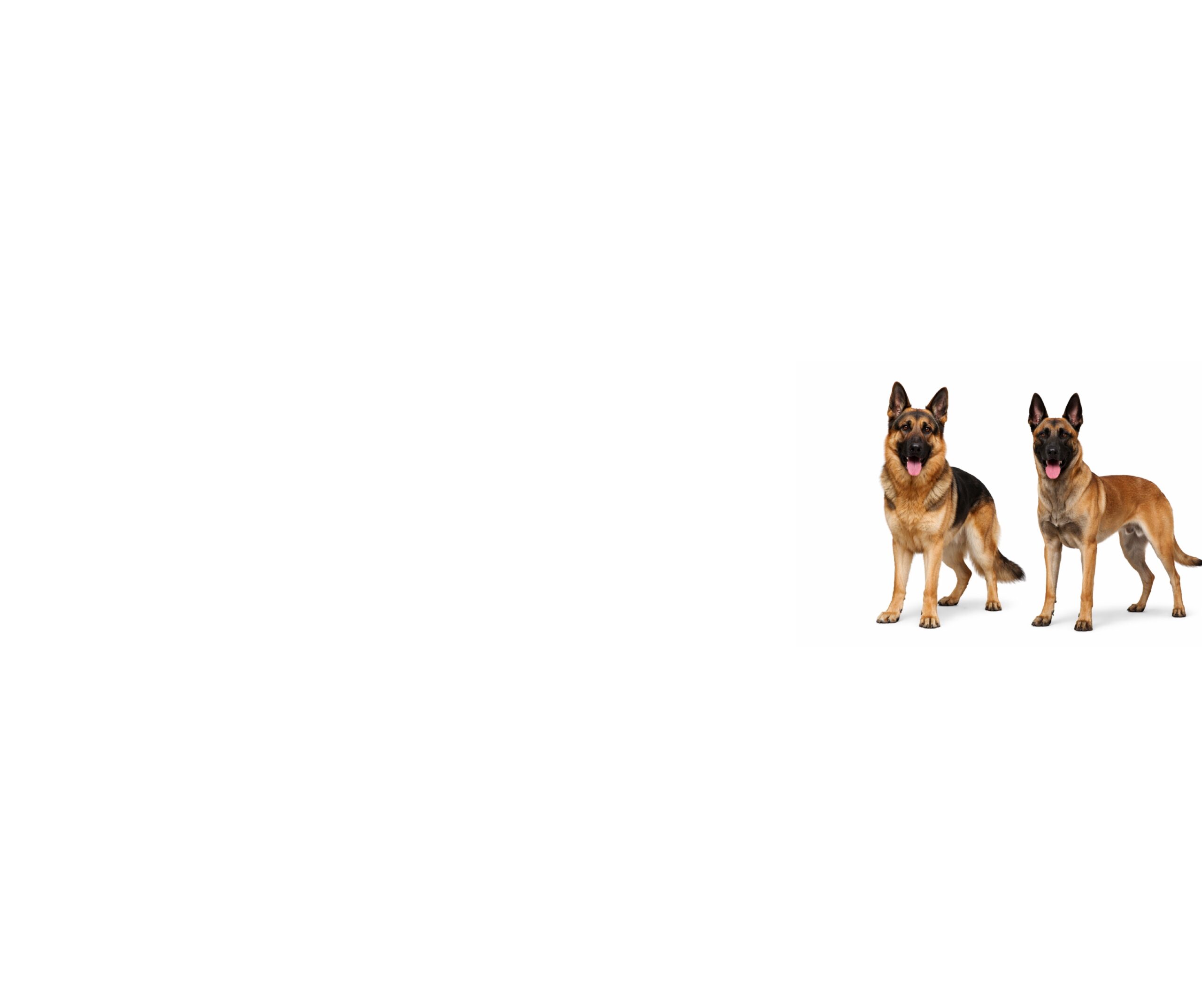
German Shepherds (GSDs) — brilliant dogs, often running “too hot” for normal life
German Shepherds are one of the most intelligent, loyal, trainable breeds you’ll ever meet — and that’s exactly why they can struggle so badly when life gets messy. They’re built to notice everything, to make decisions, to guard, to problem-solve. In the wrong environment (or after a rough start), that can show up as hypervigilance, reactivity, big feelings, and a dog who looks “naughty” when actually they’re overwhelmed and trying to cope.
What we commonly see (and what it usually means)
- Reactivity to dogs/people (barking, lunging, “losing it” on lead)
Often fear + frustration + a nervous system that’s constantly scanning. - Protective/guarding behaviour (doorways, windows, the car, the owner)
Frequently insecurity dressed up as confidence. - Handling sensitivity (especially around collar, harness, feet, back end)
Can be pain-related, trauma-related, or both. - “Switch-flipping” arousal (fine one second, over threshold the next)
These dogs can go from 0–100 fast, and they need a plan that prevents rehearsals. - Separation distress / inability to settle
Not always “attachment issues” — often chronic stress and no off-switch.
The big mistake people make with GSDs
Trying to “correct” the behaviour without changing the emotional state underneath it. With Shepherds, suppression tends to backfire: you might get quiet, but you don’t get safe. We aim for stability, predictability, and confidence — not control for the sake of it.
What tends to work well (your CBRC-style approach)
- Decompression first: reduce triggers, lower stress, stop the daily battles
- Neutrality training: “safe and boring” around dogs/people/environment
- Handler-as-buffer: teaching the dog the human will manage the world
- Consent-based handling: rebuild trust around touch, equipment, vet care
- Clear routines + enrichment: Shepherd brains need jobs that settle them, not hype them
- Pain-aware behaviour work: we always keep medical/pain on the table
Who this is for (positioning line)
If you’ve got a Shepherd who’s “too much dog” right now — reactive, anxious, guarding, or just unable to cope — that doesn’t mean they’re broken. It means they need a plan that matches their nervous system and their genetics.
Belgian Malinois — high-drive, high-sensitivity, and wildly misunderstood
Malinois are phenomenal. They’re fast, intense, clever, and often emotionally sharp — and that combination is exactly why they end up in trouble in pet homes. A Malinois without the right outlet and structure doesn’t just get bored… they can become frantic, mouthy, reactive, and constantly on the edge.
A lot of people describe them as “dominant” or “aggressive.” More often, what we’re seeing is a dog with huge drive, poor regulation, and a nervous system that’s learned the world is unsafe (or exciting in the wrong way).
What we commonly see (and what it usually means)
- Mouthing/biting in play or arousal
Not “spite” — often overstimulation + poor off-switch + reinforcement history. - Explosive reactivity (dogs, people, bikes, cars, movement)
Drive + frustration + trigger stacking; they tip over threshold quickly. - Obsessive behaviours (shadow chasing, light fixation, constant scanning)
These can become compulsive and need careful handling (not more stimulation). - Inability to rest (pacing, whining, “always on duty”)
A Malinois that can’t switch off is a welfare issue, not a training inconvenience. - Handler conflict (dog challenges pressure, escalates when corrected)
Aversives often create fallout fast in this breed.
The big mistake people make with Malinois
They try to “exercise it out” or they go heavy-handed. Both can make things worse:
- More adrenaline isn’t the same as more stability.
- More pressure isn’t the same as more clarity.
What tends to work well (and keeps everyone safe)
- Arousal regulation as the foundation: teaching downshifts, not just obedience
- Structured decompression: calm routines, predictable handling, fewer surprises
- Skill-building that creates thinking (not frantic drive): pattern games, sniff work, slow food, controlled search tasks
- Muzzle/harness training done properly: safety without stress
- Neutrality and distance work: we don’t flood them; we build tolerance in layers
- Clear management plans: Plan A/B/C so nobody gets hurt on a bad day
Who this is for (positioning line)
If your Malinois is intense, reactive, mouthy, or “living at 100 miles an hour,” you’re not alone — and you don’t need to “dominate” them. You need a rehab plan that builds safety, regulation, and trust.
