
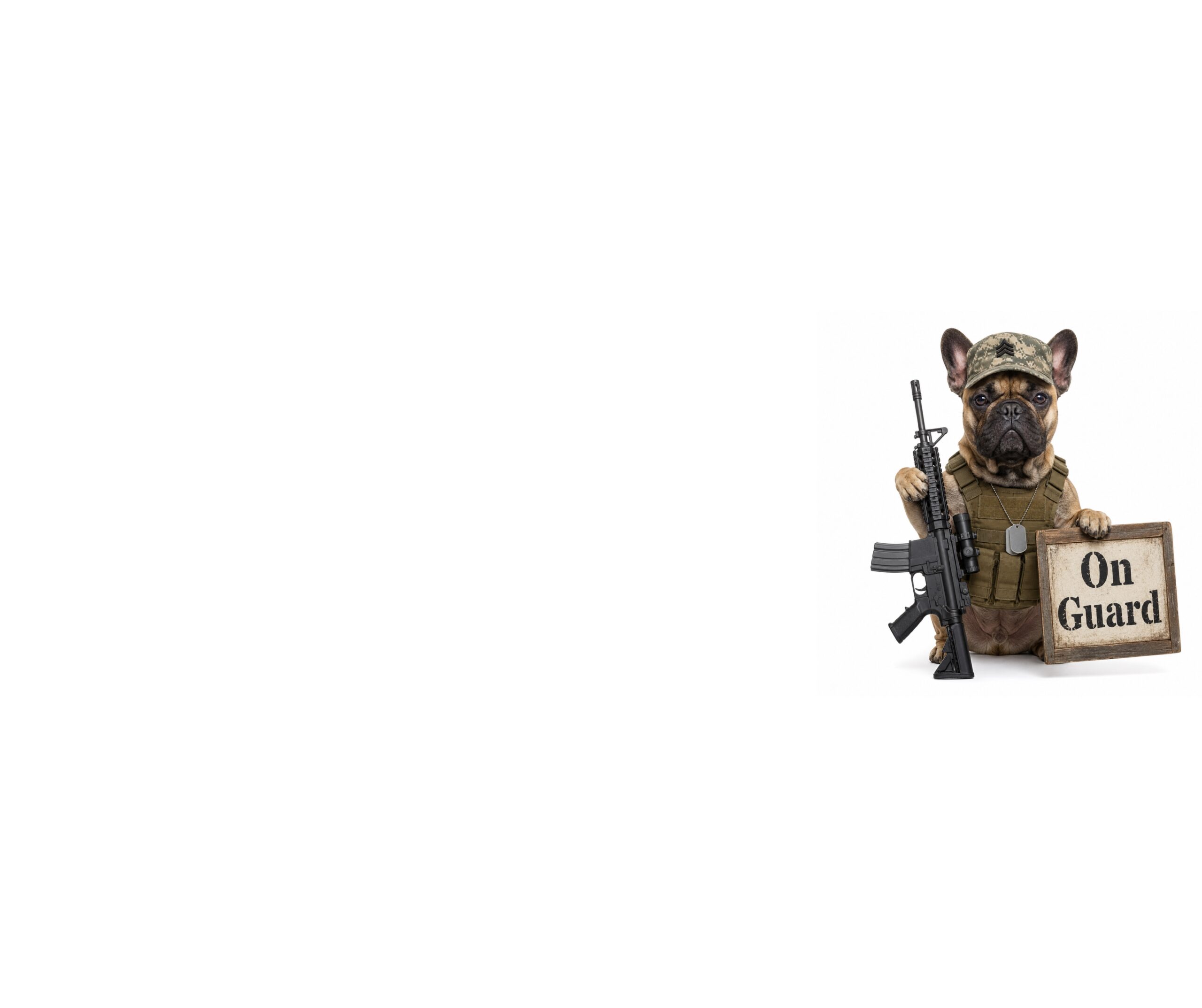
If your dog growls when you approach the sofa, freezes on the bed, blocks the kitchen doorway, or snaps when someone walks past while food is being prepared, it can feel personal.
It isn’t.
Guarding in the home is usually not a dog being “dominant” or trying to run the household. It is most often a dog saying:
“This matters to me, and I don’t feel safe about losing it.”
In this blog we will break down why dogs guard space and items in domestic environments, what your dog may be communicating before it escalates, and what helps you move forward safely.
What is guarding, in plain English?
Guarding is a distance-increasing behaviour. The dog is trying to make something (or someone) move away.
That “something” might be:
- a person approaching
- another dog
- a child moving unpredictably
- hands reaching
- someone stepping into a doorway
And the thing being guarded might be:
- a bed or sofa
- a doorway or hallway
- the kitchen during food prep
- a chew, toy, stolen item
- the dog’s own body/space
Guarding is often fear-based. It is about security, not spite.
The three common types you will see at home
1) Resource guarding (items)
This is the classic version: the dog guards an object.
Common domestic triggers:
- chews, bones, lick mats
- toys
- stolen items (tissues, socks, children’s toys)
- food bowls
- rubbish/food wrappers
The dog’s belief is usually: “If you come close, you’ll take it.”
2) Space/area guarding (places)
This is when the dog guards a location that feels valuable, safe, or strategic.
Common domestic triggers:
- the bed
- the sofa
- the dog’s crate or safe space
- the top of the stairs
- narrow hallways
- the front door area
- the kitchen doorway
This often looks like blocking, freezing, staring, growling, or snapping when someone tries to pass.
The dog’s belief is usually: “This place is mine / this place keeps me safe / I can’t cope with you coming into it.”
3) Self-guarding (body/handling)
This is when the dog guards access to their own body.
Common domestic triggers:
- being moved off furniture
- collar grabs
- harnessing
- nail trims, grooming
- being picked up
- being touched when resting
The dog’s belief is often: “Hands predict discomfort, pressure, or loss of control.”
Why domestic guarding happens (the real drivers)
Guarding is rarely “random.” It usually makes perfect sense once you look at the dog’s emotional drivers and learning history.
1) The dog feels insecure (fear of loss)
Some dogs have a deep fear that good things disappear.
This can be more common in:
- dogs with trauma histories
- dogs who have experienced scarcity (competition, inconsistent access)
- dogs who have been repeatedly approached while eating/resting
2) The dog has learned that humans approaching predicts something unpleasant
If a dog has repeatedly been:
- told off on the sofa
- dragged by the collar
- physically moved
- had items taken without trade
- disturbed while resting
…they can start to pre-empt it.
The guarding is not the start of the problem, it is the dog trying to prevent the next unpleasant thing.
3) Pain and discomfort lower tolerance
A dog who is sore may guard resting spots more intensely because:
- getting up hurts
- being touched hurts
- being moved hurts
Beds and sofas are soft, warm, supportive places. If your dog suddenly starts guarding a resting spot, a veterinary check is sensible.
4) The environment creates “trap points”
Homes are full of tight spaces:
- doorways
- hallways
- stairs
- narrow gaps between furniture
If a dog feels cornered or blocked, they may guard simply to control distance.
5) Food prep is a perfect storm
The kitchen during food prep combines:
- high value smells
- excitement/arousal
- movement and noise
- people stepping over/around the dog
- accidental drops (reinforcing the dog’s presence)
A dog can start to guard the kitchen not because they are “being greedy,” but because the kitchen has become a predictable source of high value outcomes and high arousal.
What your dog is saying before it escalates (micro-signals)
Many owners only notice guarding when there is a growl or snap. But most dogs communicate earlier.
Watch for:
- freezing (sudden stillness)
- hard staring
- head lowering over the item
- hovering, blocking access
- lip lifts, tight mouth
- whale eye
- ears pinned or flicking back
- eating faster, swallowing without chewing
- moving the item away
A growl is not “bad.” A growl is information.
If we punish the growl, we don’t remove the fear—we remove the warning.
Why it often happens on beds and sofas
Beds and sofas are high value for lots of reasons:
- comfort and warmth
- proximity to humans
- elevated position (the dog can see more)
- predictable rest
- less foot traffic (until someone approaches)
If a dog is already anxious or controlling their environment, these places can become “must protect” zones.
Why doorways and hallways become guarded
Doorways are powerful because they control movement.
A dog who guards the front door area might be:
- worried about people entering
- over-aroused by outside triggers
- trying to control who moves where
- feeling trapped by the narrow space
A dog who guards a hallway or stairs may simply be trying to maintain distance and predictability.
What to do (and what not to do)
What not to do
- Do not physically drag the dog off furniture.
- Do not corner them.
- Do not punish growling.
- Do not repeatedly “test” the guarding.
- Do not take items without a plan.
These approaches often increase fear and make escalation more likely.
What to do first: safety and management
Management is not failure, it’s prevention.
- Use baby gates to manage kitchens and tight spaces.
- Give the dog a safe rest area where they will not be disturbed.
- Keep high value chews for calm, controlled times.
- Avoid children approaching resting dogs.
- Create clear routines around food prep.
Teach trades (so the dog learns humans bring better things)
A simple principle:
Approach = good things arrive, not good things disappear.
- Toss a treat as you pass.
- Trade for a higher value item.
- Build trust slowly.
Build consent around handling and moving
If the dog guards being moved, we want to reduce conflict:
- teach “off” using reward-based training
- use lures and reinforcement rather than hands
- avoid collar grabs as a default
Reduce overall stress
Guarding often worsens when the dog’s stress bucket is full.
Support can include:
- predictable routines
- decompression walks/sniffing
- enrichment that doesn’t increase arousal
- protected rest and sleep
When to get professional help
If your dog is:
- guarding multiple areas
- escalating to snapping or biting
- guarding around children
- guarding suddenly when they never used to
…please get specialist support.
At CBRC, we approach guarding by working with the emotional drivers—fear, insecurity, pain, stress, and learned expectations. We don’t just try to “stop the growl.” We build safety, trust, and alternative coping strategies so the dog no longer feels they need to guard.
Final thought
Guarding is your dog telling you something important:
- “I don’t feel secure.”
- “I’m worried you’ll take this.”
- “I’m overwhelmed and I need space.”
When we listen early—before the shout—we can keep everyone safe and help the dog feel safe enough that guarding isn’t necessary.
The Canine Behaviour Rehabilitation Centre CBRC
CBRC specialises in complex behaviour cases and welfare‑led rehabilitation. If you’d like support — whether that is an assessment, a structured plan, or residential rehab — you can contact us here: CONTACT US
