
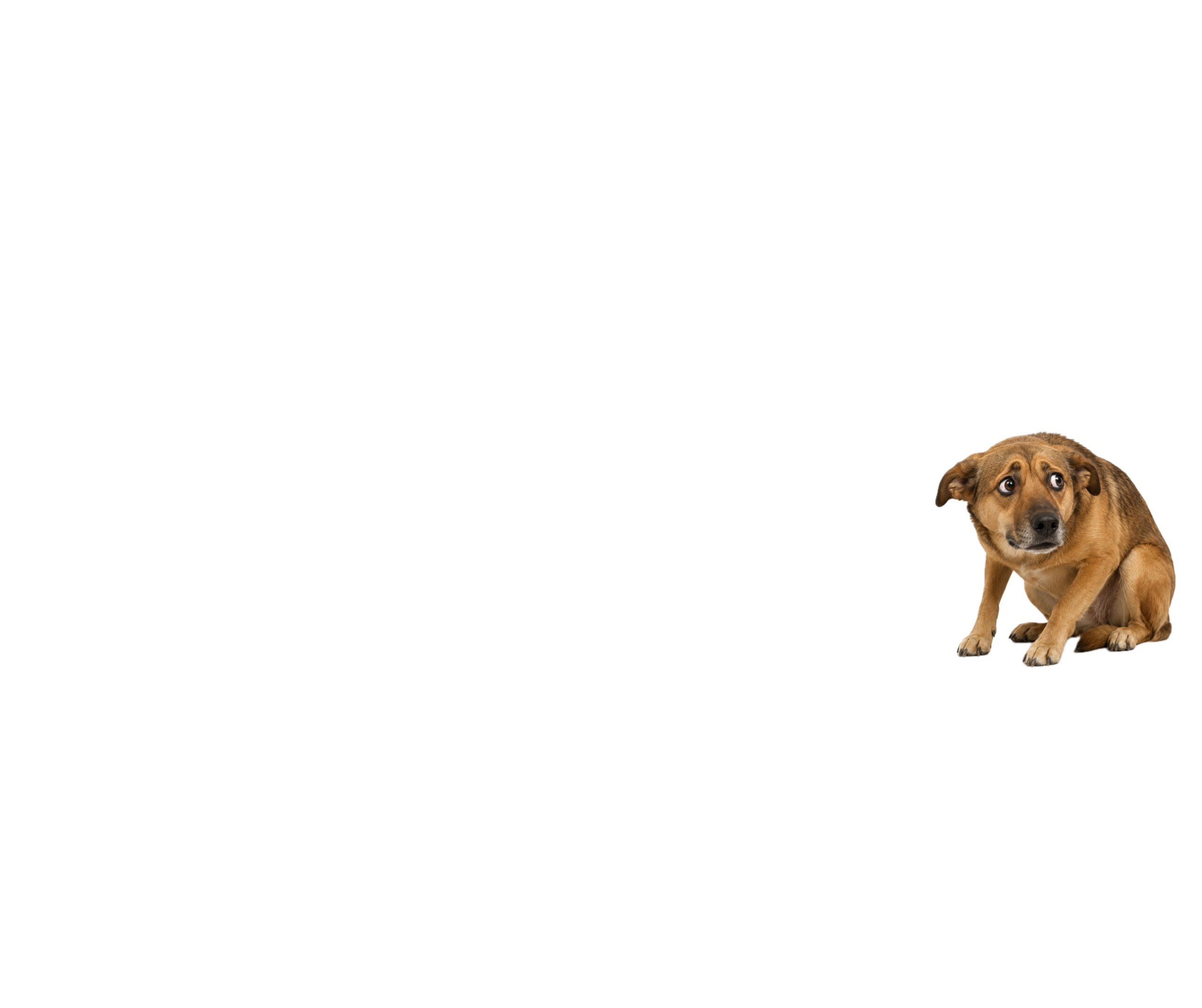
If you live with a fear-reactive dog, you’ve probably had moments where you feel embarrassed, exhausted, and completely stuck.
Your dog barks. Lunges. Freezes. Spins. Tries to get away. Maybe they look “fine” one second and then suddenly they’re not.
This blog is here to offer a different lens.
Because for many fear-reactive dogs, what you’re seeing isn’t “bad behaviour”. It’s not stubbornness. It’s not a dog trying to dominate, manipulate, or embarrass you.
It’s a panic response. A terror response. A nervous system screaming: I don’t feel safe.
And when we translate that into human terms, it becomes much easier to understand why your dog behaves the way they do — and what actually helps.
Imagine living in a world that feels unsafe by default
For a fearful dog, the world can feel like it’s full of threats that appear without warning:
- people stepping out of doorways
- dogs appearing around corners
- sudden noises (bins, engines, shouting, children)
- movement that feels unpredictable (joggers, scooters, bikes)
- hands reaching, bodies leaning, strangers staring
Now imagine you don’t have the ability to rationalise it.
You can’t tell yourself, “That person is just walking past.”
You can’t say, “I’m safe, I’ve done this before.”
You can’t ask someone to give you space.
You can’t explain your fear.
You can only communicate with your body.
That’s what your dog is doing.
The human comparison: it’s like your alarm system is stuck on high
Think about a smoke alarm.
A normal smoke alarm goes off when there’s smoke.
But an oversensitive smoke alarm goes off when you make toast.
It’s not being dramatic. It’s not “misbehaving.” It’s doing its job — it’s just set too sensitively.
A fear-reactive dog often has a threat system that’s like that.
Their brain and body are constantly scanning for danger. They’re bracing for the next thing. They’re trying to stay one step ahead.
And when something tips them over threshold, their body doesn’t choose a calm response. It chooses survival.
What a panic response feels like (in human words)
If you’ve ever had a panic response yourself, you’ll recognise some of this:
- your chest tightens
- you can’t think clearly
- your body feels hot or shaky
- you feel trapped
- you need space immediately
- you can’t “logic” your way out of it
Now imagine you’re having that feeling — and someone says:
- “It’s fine.”
- “Stop it.”
- “There’s nothing to be scared of.”
It might be true. But it won’t help.
Because panic isn’t a thinking-brain problem. It’s a body problem.
That’s why fear reactivity isn’t solved by telling a dog off, yanking the lead, or trying to force them to “face it.”
In that moment, your dog isn’t learning. Your dog is surviving.
“But he knows it’s me… why won’t he listen?”
This is one of the most heart-breaking parts for owners.
You can be the safest person in your dog’s world, and your dog can still react.
Not because they don’t trust you.
But because when the nervous system hits panic, the dog’s brain is no longer in “listen and learn” mode.
It’s in:
- fight (barking, lunging, snapping)
- flight (pulling away, trying to escape)
- freeze (stiff, stuck, unable to move)
If you’ve ever been truly frightened, you’ll understand this. In fear, your body reacts before your mind catches up.
What the behaviours are really saying
Fear-reactive behaviour is communication. It’s your dog trying to create safety.
Here’s what it can mean in plain English:
- Barking and lunging: “Back off. I need space. Don’t come closer.”
- Freezing: “I can’t process this. I don’t know what to do.”
- Pulling hard to get away: “I need to leave. Now.”
- Snapping: “I’m out of options. I feel trapped.”
- Spinning, frantic movement: “My body is overloaded. I can’t settle.”
None of this is your dog being “nasty.” It’s your dog being terrified.
The part people miss: being trapped makes fear explode
Here’s a human scenario.
Imagine you’re already anxious, and then someone stands too close, blocks your exit, and tells you to calm down.
Even if they mean well, your body will likely escalate.
That’s what happens to many dogs on a lead.
A lead can be necessary and safe — but it also removes choice.
And choice is everything for a fearful nervous system.
Common “trapped” moments for dogs:
- tight lead with no room to move away
- narrow paths, doorways, corners
- people approaching head-on
- strangers leaning over them
- forced greetings (“He just wants to say hello!”)
- being held still while something scary comes closer
When a dog can’t create distance, they often try to create it the only way they know how: by making the scary thing go away.
Micro-signals: the quiet signs before the big reaction
Most dogs don’t go from calm to explosive instantly. They climb a stress ladder.
The early signs can be tiny — and they matter.
Look for:
- sudden stillness (freezing)
- weight shifting back
- mouth closing tight, lips pulled back
- tongue flicks, yawns that don’t fit the moment
- hard staring or frantic scanning
- taking food harder, or refusing food completely
- shaking off repeatedly, sudden scratching
These are your dog’s early warning system.
If we learn to read them, we can step in before the panic takes over.
What actually helps (think: how you’d support a human in panic)
If someone you loved was panicking, you wouldn’t punish them.
You wouldn’t force them to stay in the situation.
You’d help them feel safe, then you’d rebuild confidence gradually.
For dogs, that often looks like:
1) Space and distance
Distance is not avoidance. For a fearful dog, distance is oxygen.
Sometimes the kindest, most effective thing you can do is simply create space.
2) An exit plan
Your dog needs to know they can leave.
That might mean turning around early, stepping behind a car, crossing the road, ducking into a driveway, or choosing quieter routes.
3) Lowering social pressure
Many fearful dogs do not want to be greeted.
A huge part of helping them is advocating for them:
- “Please don’t approach.”
- “He’s nervous, we’re training.”
- “No greetings today, thank you.”
4) Predictability and calm
Slow your movements. Keep your voice steady. Avoid sudden tension on the lead.
Your dog is reading you constantly. Calm, predictable handling helps the dog’s body come down.
5) Working under threshold
This is the heart of rehabilitation.
We don’t build confidence by pushing a dog into panic and hoping they cope.
We build confidence by keeping the dog in a zone where they can still:
- take food
- sniff
- disengage
- recover
That’s where learning happens.
The CBRC approach: we change feelings, not just behaviour
At CBRC, we work from a simple truth:
Behaviour is driven by emotion.
So we don’t just ask, “How do we stop the barking?”
We ask:
- What is the dog feeling?
- What does the dog believe is about to happen?
- What does the dog need to feel safe enough to learn?
We don’t need to see the biggest behaviours to start helping.
Often, the real story is in the micro-signals, the patterns, the dog’s recovery time, and the moments where the dog is trying to cope long before they explode.
Final thought: your dog isn’t giving you a hard time — they’re having a hard time
If your dog is fear reactive, they are not choosing chaos.
They are trying to survive a world that feels frightening.
When we translate their experience into human terms, the goal becomes clearer:
- not to suppress the behaviour
- not to “prove” who’s in charge
- not to force bravery
But to build safety, predictability, and trust — so the dog doesn’t need to panic in the first place.
And when the feelings change, the behaviour follows.
The Canine Behaviour Rehabilitation Centre CBRC
Do you need help with your dog?
At CBRC we support complex cases in two main ways:
- One-to-One Behavioural Support (practical management plans)
- Residential Rehabilitation (for dogs who need a full decompression period, structured handling work, and a consistent rehab plan)
If you want a no obligation chat to talk it through, tell me your dogs age, where your dog is from, what you are seeing day-to-day, and what your ideal outcome looks like and we will work out the safest next steps.
CONTACT US
