The “easy dog” myth (and why it catches people out)
Sighthounds are often sold as the perfect low-maintenance pet: quiet, gentle, sleeps all day, doesn’t need much. And yes—many of them are beautifully calm indoors once they feel safe. But the bit that gets missed is that sighthounds are purpose-built to spot movement, lock on, and chase. That wiring doesn’t disappear because they live in a semi with a nice sofa.
In practice, a lot of the behaviour challenges we see aren’t “bad dogs” at all—they’re normal sighthound traits landing in a modern UK pet home: cats, joggers, scooters, deer, busy parks, tight lead handling, and expectations of off-lead freedom.
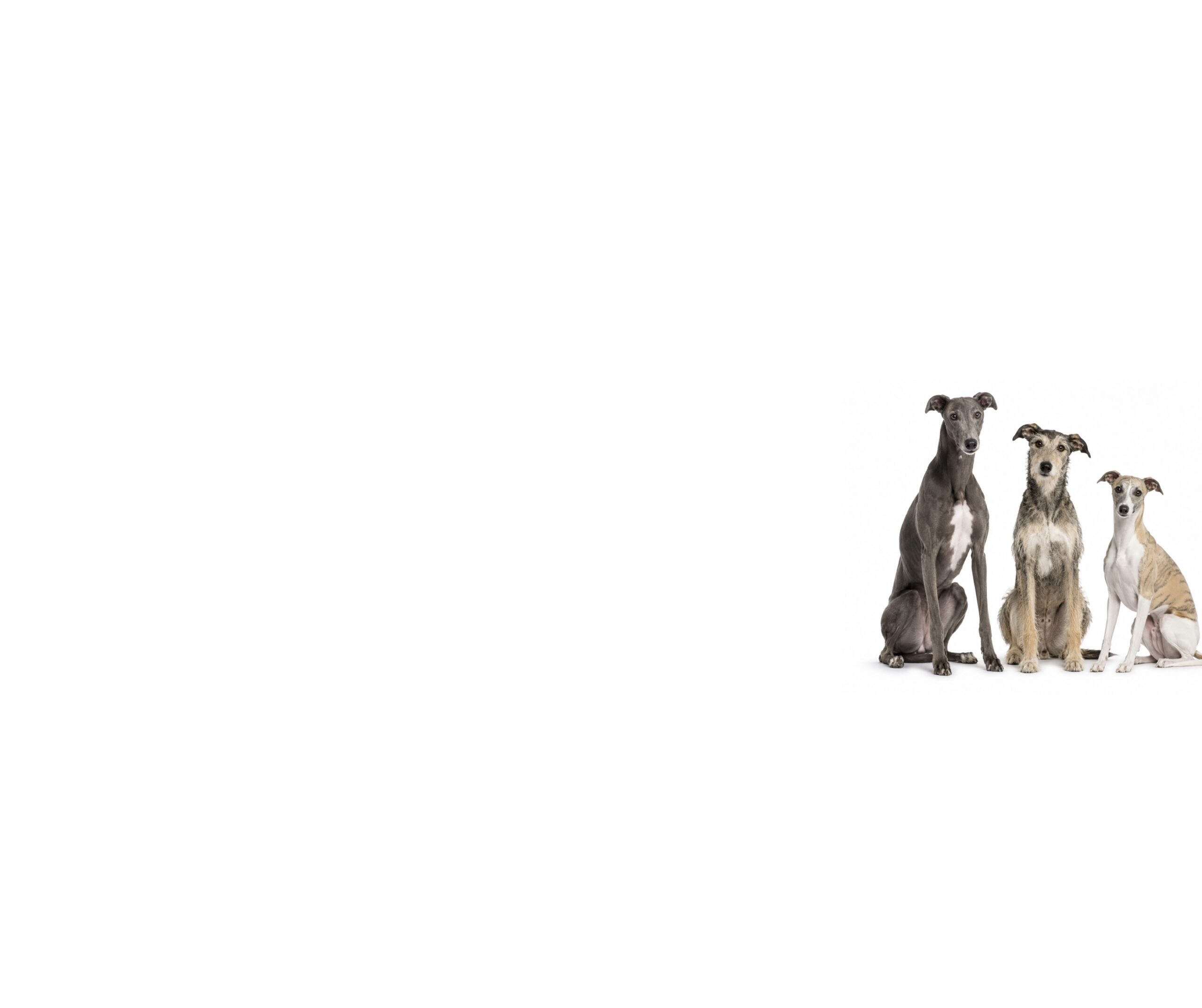
This guide covers Greyhounds, Whippets, Salukis, Deerhounds, Italian Greyhounds, and the big UK reality: Lurchers (sighthound crosses, often with collie/terrier/bull type influences).
What makes a sighthound a sighthound (genetics + purpose)
Sighthounds were selected for: – Visual sensitivity to movement (fast “spot and lock”) – Explosive acceleration (from still to full speed in a second) – Chase persistence (finishing the job) – Low body fat / light frame (speed and efficiency) – A different social style than many gundogs or herding breeds (often polite, less “busy-to-please”)
Lurchers: the “it depends” dog
A lurcher isn’t a breed—it’s a type. The behaviour profile depends heavily on the other half: – Sighthound x Collie: more handler-aware, but can bring motion sensitivity + herding-style scanning – Sighthound x Terrier: more tenacity, more predation, often more vocal/frustrated – Sighthound x Bull type: can be very affectionate and people-focused, but may bring strength + intensity
So with lurchers, we always look at: what do they do when they’re stressed—freeze, flee, fight, or fixate? That tells you more than the label.
Temperament patterns you’ll commonly see
Not every sighthound fits the same mould, but these themes come up a lot: – Gentle, sensitive nervous systems (they notice everything) – Fast arousal shifts (calm → launch → calm again) – Low tolerance for rough handling (not stubborn—often self-protective) – A strong preference for predictability (routine helps them settle) – Selective “social energy” (some love everyone, some are politely aloof)
The pet-home reality check (kind, honest, no shame)
1) Recall is not a moral issue
A sighthound ignoring you mid-chase isn’t being naughty. In that moment, their brain is doing exactly what it was designed to do.
2) Off-lead freedom may be limited—and that’s okay
Many sighthounds live brilliant, fulfilled lives with: – longline walks – secure fields – enclosed gardens – structured enrichment
3) They can be “quiet” and still be anxious
Some sighthounds don’t bark, don’t lunge, don’t make a scene. They just: – freeze – shut down – refuse to move – pant, tremble, scan – sleep excessively as a coping strategy
Common behavioural challenges (and what’s usually underneath)
1) Predation/chase: cats, wildlife, joggers, bikes
What it looks like: sudden fixation, stalking posture, “gone” eyes, lunging, screaming, pulling, bolting if off-lead.
What’s underneath: predatory motor pattern + movement sensitivity. It’s not aggression; it’s chase behaviour.
What helps: – Management first: secure fencing, double-lead systems where needed, longline skills, muzzle training (see below) – Pattern games: predictable “look-return-reward” routines at distance – Distance as a training tool: you can’t teach thinking in the middle of a launch – Safe outlets: lure play in secure spaces, flirt pole only if it doesn’t increase fixation (depends on the dog)
2) Lead frustration and “sudden launch” behaviour
What it looks like: calm walking then an explosive lunge; spinning; vocalising; grabbing the lead; redirected nips (more common in some lurchers).
What’s underneath: arousal spike + restraint frustration + sometimes pain (neck/shoulders) if walked on collars.
What helps: – Harness over collar (protect neck and reduce panic) – Decompression walks (sniffing + choice) rather than constant heelwork – Teach a default pattern: “see thing → turn away → treat” – Reduce trigger stacking: fewer busy environments while you build skills
3) Handling sensitivity (especially ex-kennel dogs)
What it looks like: flinching, freezing, growling, snapping when touched; fear of men; fear of hands over head; panic at grooming.
What’s underneath: lack of early handling, medical history, pain, or learned fear. Many sighthounds are physically sensitive—thin skin, bony frames, old injuries.
What helps: – Consent-based handling (teach a start button like chin rest) – Cooperative care: tiny steps, predictable routines, opt-out allowed – Pain check: teeth, spine, hips, old racing injuries, corns (greyhounds)
4) Separation distress (from subtle to severe)
What it looks like: pacing, drooling, howling, destruction, toileting, self-injury; or the quiet version—refusing food, shaking, scanning.
What’s underneath: attachment needs + sudden change of environment + lack of coping skills.
What helps: – Slow independence building (seconds to minutes, not “leave them to it”) – Predictable pre-leave routine – Settle training that actually teaches down-regulation – Vet support where anxiety is high (behaviour + medical together)
5) Dog-dog issues: from polite to panicked
Some sighthounds are wonderfully neutral. Others are: – worried by bouncy adolescent dogs – overwhelmed by face-to-face greetings – reactive on lead but fine off lead
What helps: – Parallel walking and “no pressure” social exposure – Avoid tight greetings on lead – Teach disengagement and calm observation
6) Startle responses and noise sensitivity
What it looks like: spooking at bangs, bins, scooters, shouting; bolting; refusing to walk.
What’s underneath: sensitive nervous systems + poor early habituation + sometimes trauma.
What helps: – Choice-based exposure (don’t flood) – Predictable routes initially – Safety cues (mat, car routine, “let’s go” pattern)
Safety essentials (sighthound-specific)
Muzzle training (normalise it, don’t dramatise it)
A muzzle can be a welfare tool for: – scavenging – cat safety – vet handling – high arousal moments
Done properly, it’s not punishment—it’s freedom with safety.
Double-lead / secure attachment
For flight-risk dogs, especially newly adopted: – harness + martingale (or two-point harness) – two leads to two attachment points – no off-lead until you’ve built reliable patterns and assessed prey drive
Secure fencing and door routines
Many sighthounds can clear or squeeze through gaps you wouldn’t expect. Door safety routines matter more than “training a perfect recall.”
Training approach that fits sighthounds (what works better than “more obedience”)
- Decompression first: nervous systems settle before learning sticks
- Distance and predictability: build calm observation, not confrontation
- Short, frequent reps: they often do best with tiny sessions
- Reinforce check-ins: make looking back a habit
- Don’t over-drill: repetitive pressure can create avoidance
A simple “first 30 days” plan (especially for rescues)
Week 1: Safety and settling
- same walking route
- longline only
- quiet enrichment (snuffle, scatter feeding)
- rest protected (no constant visitors)
Week 2: Gentle skill building
- pattern games at distance
- consent-based handling foundations
- calm car routines
Week 3: Expand the world carefully
- new environments one at a time
- secure field sessions if appropriate
- parallel walks with stable dogs
Week 4: Review and adjust
- identify triggers and thresholds
- decide what “safe freedom” looks like for this dog
Suitability checklist (who sighthounds tend to thrive with)
Sighthounds often do best with people who: – are relaxed about longlines and management – can keep routines predictable – don’t push social greetings – are happy to train for calm, not just control
They can struggle in homes that: – expect off-lead reliability quickly – have lots of uncontrolled cat exposure – are very busy/noisy with constant visitors
Want support with your sighthound or lurcher?
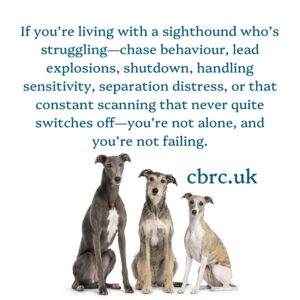
If you’re living with a sighthound who’s struggling—chase behaviour, lead explosions, shutdown, handling sensitivity, separation distress, or that constant scanning that never quite switches off—you’re not alone, and you’re not failing.
At CBRC, we support complex and sensitive dogs with a welfare-led, behaviour-first approach. Depending on what you need, we can help via 1:1 behavioural support or, for bigger cases, a residential rehabilitation stay with structured decompression, skills building, and a clear plan for home.
If you want to talk it through, tell us your dog’s age, background (owned from a puppy/ex-racer/rescue/private rehome), what they do on lead and around movement triggers, and what “a good life” looks like for you both—we’ll help you map a safe, realistic route forward.
The Canine Behaviour Rehabilitation Centre CBRC
CONTACT US